The Truth About Remodelling Old Gold: Should You Melt Down Your Inherited Jewellery?
If you have a jewellery box sitting in your bedroom filled with inherited pieces, vintage treasures, or unworn gold from family members, you are certainly not alone.
Whether it is a worn yellow-gold wedding band from a grandparent, a heavy vintage chain, or a brooch that simply isn't your style, these items hold immense emotional value. And it is completely natural to wonder: could I take this sentimental metal, have it melted down, and turn it into a sleek new ring or pendant I would actually wear every single day?
My name is Militza Ortiz, and as a bespoke jewellery designer with over 20 years of experience working from my studio in Wimbledon, South West London, I work on heirloom redesigns all the time. It is one of the most rewarding parts of my job!
However, during initial redesign consultations, one question pops up more than almost any other:
““Can you just melt down all my old gold and pour it straight into my new design?””
The short answer? Sometimes we can—but sometimes, it isn't the simplest, safest, or most cost-effective way to get the stunning, durable piece you are dreaming of.
So, pour yourself a cup of tea, and let's walk through what actually happens at the jeweller's bench when we work with old metal.

Recycling wedding bands made of gold.
Jeweller’s Bench Time vs. Metal Value: Why Melting Gold Doesn't Always Save You Money
It is easy to assume that if you supply your own gold, your custom piece will automatically be a lot cheaper. After all, you are bringing the raw material, so shouldn't you only be paying for the final shaping?
Here is the honest truth from the work bench: turning pre-loved jewellery into pristine, workable gold wire or sheet is a surprisingly time-consuming job.
Before I can even begin crafting your new piece on my bespoke jewellery bench, preparing scrap metal requires several hours of careful work:
Inspecting & Cleaning: Examining every millimetre under magnification to file away old solder joins, spring clasps, and dirt that would ruin the melt.
Crucible Melting: Hand-melting the cleaned gold in a crucible with flux to form a clean, solid ingot.
Milling & Annealing: Passing that ingot through a rolling mill dozens of times—heating and quenching (annealing) the metal repeatedly so it doesn't crack—until it becomes smooth sheet or hand-drawn wire. This step can take hours!
In the UK, where skilled goldsmithing reflects decades of master craftsmanship, spending two to three hours just preparing raw metal adds a considerable labour cost before any actual jewellery making starts.
When Does Remelting Your Own Gold Make Economic Sense?
It really comes down to volume and economies of scale:
Small Amounts (3g to 5g): If you bring in one delicate gold band or a small charm, the fixed bench hours needed to melt and mill that gold represent a high proportion of labour relative to the metal's value.
Substantial Collections (10 grams +): If you have inherited a pile of heavy chains, bangles, or multiple thick rings, those preparation hours are spread across a lot of gold weight. In that scenario, processing your own gold becomes far more cost-effective for you.
Let's Talk Metal Loss: What Actually Disappears in the Fire?
There is a huge urban myth floating around that melting down gold causes half of your metal to vanish into thin air. I have had clients arrive genuinely worried that their gold will evaporate in the crucible! Let's clear up what really happens.
Direct Gold Melt Loss is Tiny (Only 1% to 3%)
When clean gold is melted in a crucible, the actual weight lost to oxidation or surface burn-off is tiny—typically just 0.1% to 1% for clean gold, or 1% to 3% for scrap containing minor surface oils or base metal alloys.
Where Does the Rest of the Gold go? Manufacturing Wastage & Casting
The weight change doesn't happen in the fire; it happens during the shaping, filing, and polishing stages.
Technical studies, such as Dieter Ott's research on investment casting principles, show how liquid metal forces dictate casting success. When I handcraft or finish a ring, I am sawing away microscopic bits, filing edges smooth, and buffing the surface with high-shine polishing wheels. This creates ultra-fine gold dust (called lemel), which accounts for 5% to 15% of the metal weight being smoothed away from the finished piece.
If your piece is being cast, we also need 50% to 70% extra gold weight in the crucible to form a "casting button" or sprue. This extra weight creates the hydraulic pressure needed to push liquid gold into every corner of the mold so your piece turns out solid and free from microscopic air bubbles.
Matching Your Metal to Your New Design
This is SO important! Understanding that no jeweller can make gold grow. Alchemy, may sound like magical term, but its not, so if you have a tiny old ring but your new design is a massive pendant necklace it simply won’t grow.
Whether you need to add extra gold—or get surplus gold back—depends entirely on what you bring versus what we are creating. If you bring a tiny 2g ring but want a chunky signet ring, we will need to add metal. If you bring a heavy 20g chain to make a delicate solitaire ring, you will have plenty of gold left over!
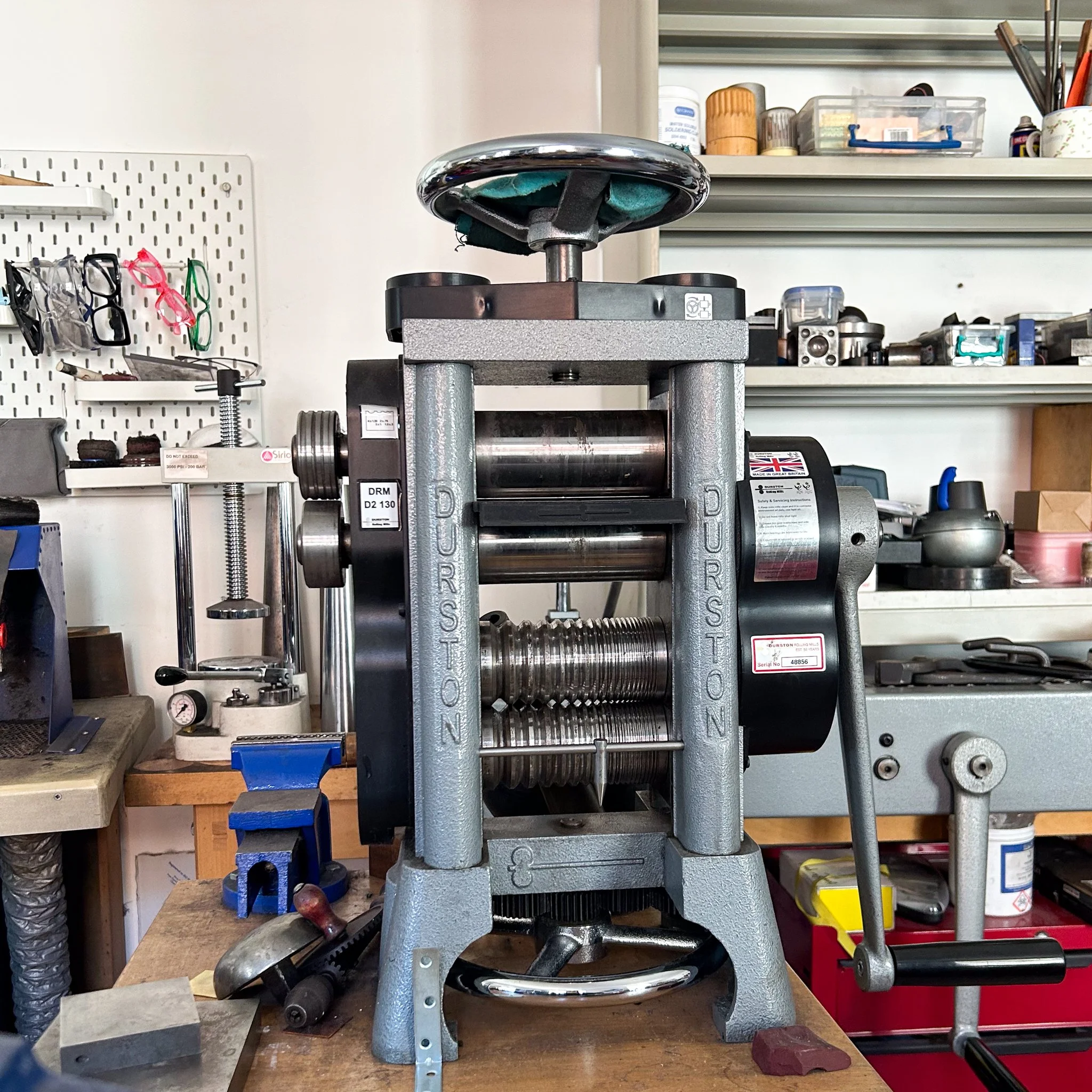
A rolling mill for jewellery, one of the many tools used.
3. The Cadmium Danger: Why Old Vintage Alloys Need Extra Care
Beyond bench hours and weight maths, there is a very serious health and technical reason why jewellers are cautious about remelting vintage pieces.
So,what is Cadmium?
Cadmium is a soft, heavy metal that was historically added to gold and silver solders (and cheap fashion jewellery) because it lowers the melting point and makes metal flow easily.
Jewellery Workshop Health Risks of Cadmium
When old rings or chains—which are often covered in invisible solder joins from past repairs—are heated with a torch, cadmium creates a real hazard.
As detailed in the ATSDR Toxicological Profile for Cadmium, cadmium vaporises at just 767°C, producing toxic, invisible cadmium oxide fumes. Inhaling these fumes can cause metal fume fever, lung damage, and long-term organ toxicity. It is officially classified by the International Agency for Research on Cancer (IARC) as a Group 1 human carcinogen.
Personally, as an asthmatic jeweller, I read the words toxic fumes and carcinogen in one paragraph and I run for the hills.
Cadmium Skin Hazards for the Wearer
Cadmium isn't just a threat in the workshop; it can cause awful reactions on your skin.
If you have ever worn a vintage or imported piece and suffered persistent itching, blistering, or peeling skin, you might have been reacting to cadmium leaching from the metal alloy. People often assume it is a nickel allergy, but hidden cadmium is frequently the real culprit. Readers curious about metal composition testing can check Nowlans Precious Metal Testing for insights into non-destructive testing.
UK Legal Safety (REACH Regulations) regarding Cadmium
There has been some very scary stories in the news about Tiktok and Amazon shops selling fashion jewellery loaded with cadmium. In the UK, strict safety laws protect consumers. Under UK REACH Chemical Regulations, it is illegal to supply or sell jewellery containing more than 0.01% cadmium by weight (100 ppm), and I am delighted with this regulation.
The Times cites “The jewellery industry has three layers of regulation: the Hallmarking Act 1973, which deals with the labelling of precious metals; the Reach (registration, evaluation, authorisation and restriction of chemicals) regulation, which places restrictions on potentially hazardous chemicals; and the general product safety regulations that cover general consumer safety.”
At Militza Ortiz Jewellery, we use certified cadmium-free solders and pristine alloys so your jewellery is 100% safe to wear every day.
Why Solder can ruin remelted gold by making the metal brittle
Even setting health risks aside, melting gold covered in old solder tends to ruin the metal. Solder introduces zinc, cadmium, and impurities into the melt. When the new ingot cools, these contaminants cause porosity and brittleness, meaning the gold can crack when forged under the hammer or fail when setting gemstones.
Why does this matter? Because if you come to me with an old chain, the chances are that it will have at least one solder point per link, that is a lot of solder. So melting chains is usually not a good idea.
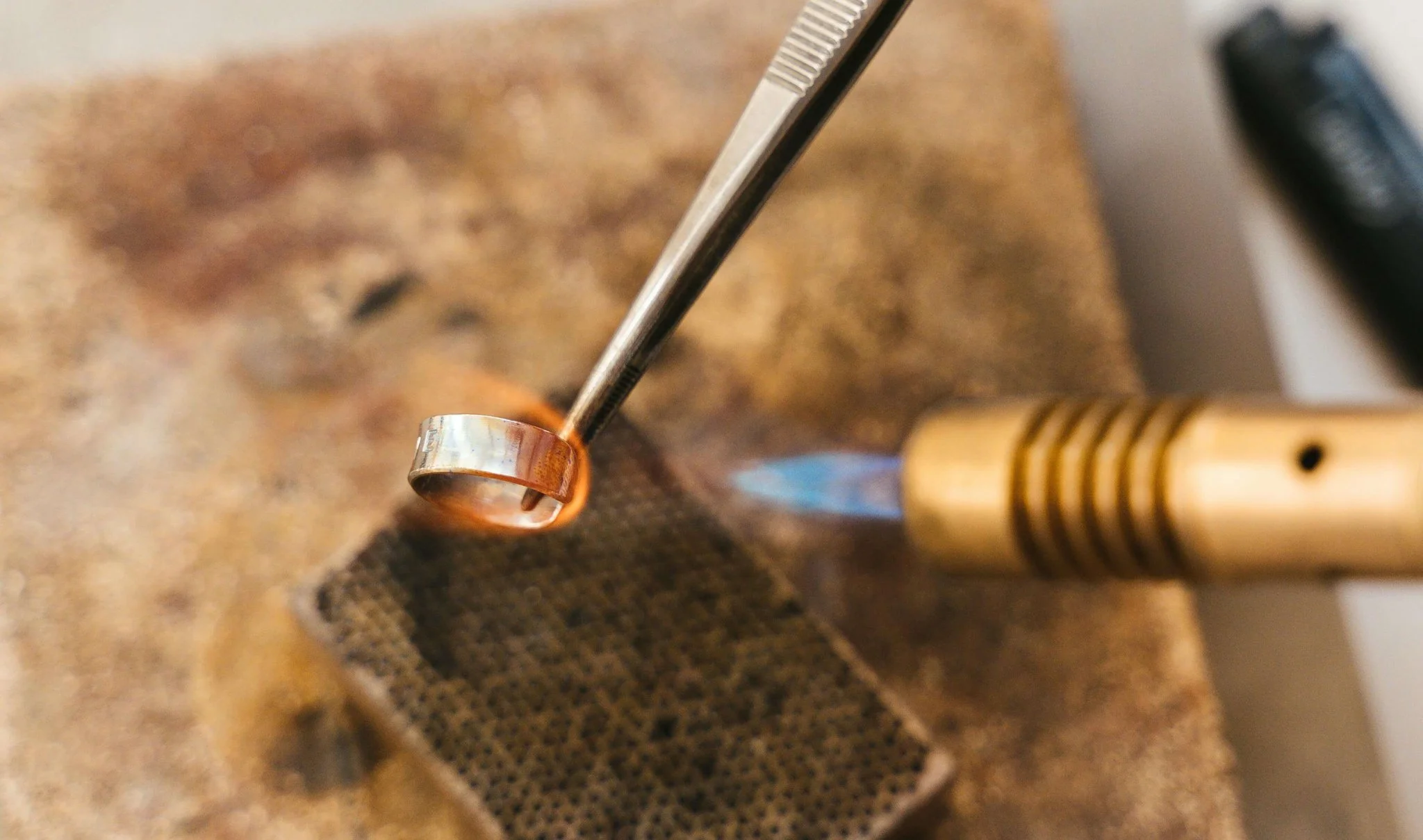
Platinum requires very high heat for soldering and melting.
4. What About Reworking Inherited Platinum?
If you have inherited platinum pieces, the rules of the game are a bit different. Platinum is a noble metal of incredible purity (usually 90% to 95% pure) and doesn't oxidize the way gold alloys do during melting.
However, platinum brings its own studio challenges:
Extreme Melting Heat: Platinum melts at a staggering 1,768°C (compared to gold's 1,064°C), requiring specialized oxygen-hydrogen equipment and protective eye shields.
Contamination Risk: At near 1,800°C, liquid platinum acts like a sponge for carbon, iron, or trace solder. A tiny speck of foreign metal will permanently ruin a platinum ingot.
You can read more about technical workshop standards on the Ganoksin Orchid Jewellery Community. Because of these extreme temperature demands, trading in scrap platinum for fresh, refined stock is almost always the safest path.
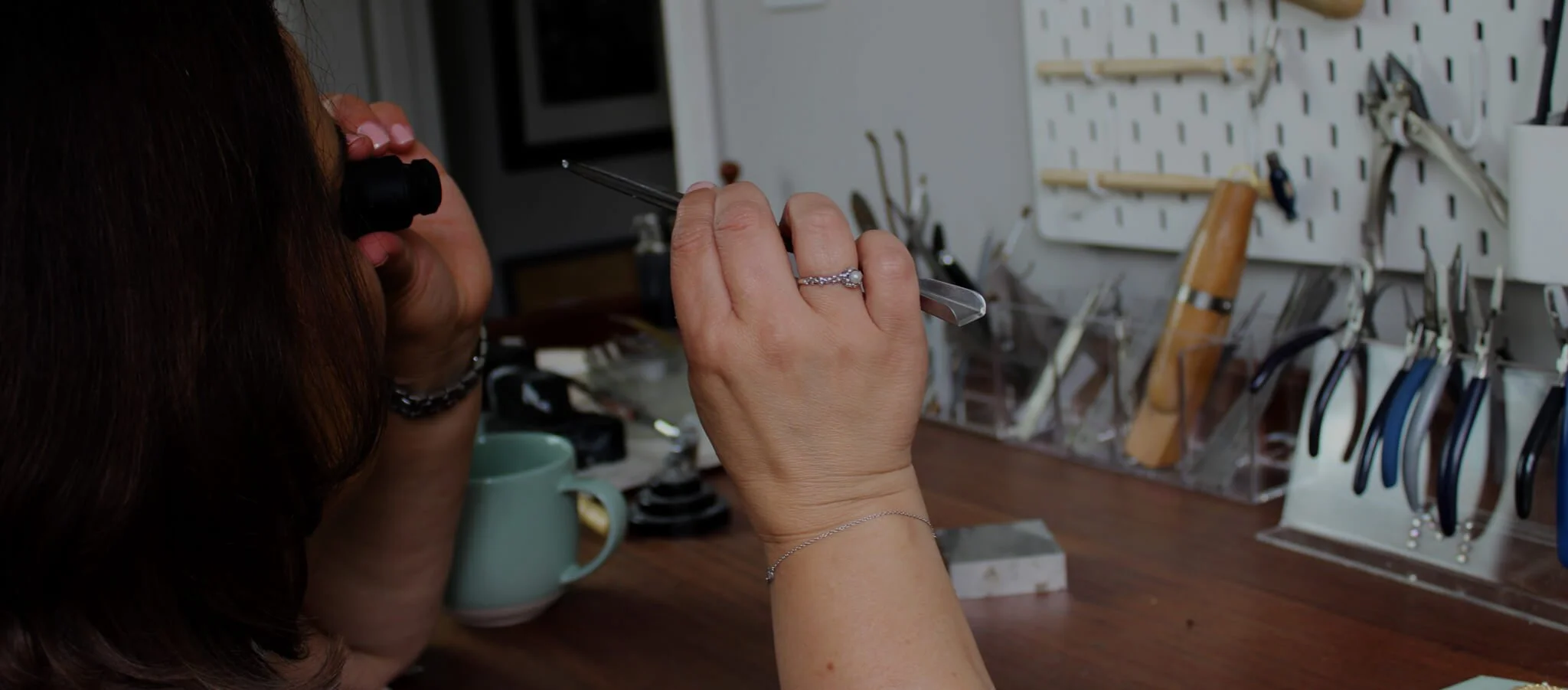
Your gemstones also get checked out.
5. Smarter, Safer Ways to Redesign Your Heirloom Jewellery
Now for the good news! Knowing these technical realities doesn't mean your sentimental pieces have to stay locked in a drawer. There are wonderful, creative ways to transform your heirlooms through our jewellery remodelling service:
Option A: Scrap Part-Exchange for Certified 100% Recycled Gold
By far the most popular and cost-effective route is a scrap part-exchange.
We weigh and test your old gold or platinum, and credit its full scrap value directly against your final bill. Then, we craft your brand-new design using certified 100% recycled gold or platinum. You get the best of both worlds: your family metal directly pays for your new treasure, while your new ring is made from flawless, durable metal free from solder or brittleness. Another win here is that your scrap gold gets turned into wonderful recycled gold.
Option B: Resetting Heirloom Gemstones into Modern Mounts
Most of the sentimental soul of jewellery lives in its gemstones! Unmounting inherited diamonds, sapphires, rubies, or emeralds and resetting them into a fresh, modern mount is a great way to keep family history alive. I love how old-cut diamonds look in clean bezel setting, it gives a great contrast the shine their hand cut shape has.
Option C: Keepsake Inlays & Inner Band Accents
If you are deeply attached to the exact physical metal of a specific band—like your mother's wedding ring—we can often incorporate a clean section of that gold as an inner lining or subtle accent inside your new piece. That way, the exact metal sits against your skin, while the main structure remains strong and secure.
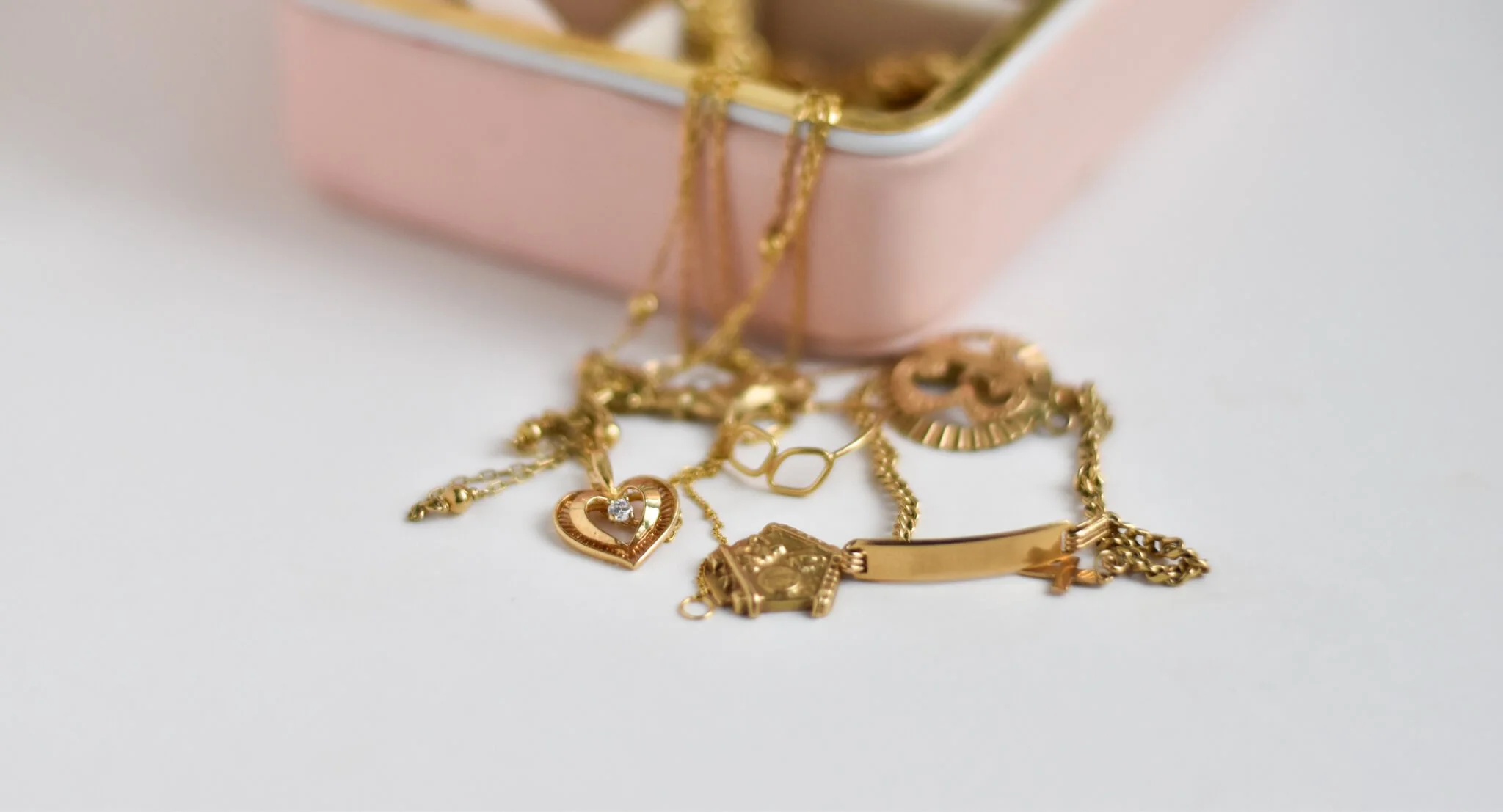
Old jewellery deserves to be remodelled.
6. Let's Give Your Heirlooms a Fresh Story
Jewellery is so much more than metal and stone—it is history, love, and memory you can hold in your hand. Whether we are remelting a large collection of family gold, part-exchanging scrap, or resetting sparkling heirloom gems, my goal at Militza Ortiz Jewellery is to make the entire journey transparent, collaborative, and joyful.
Learn more about my design philosophy on my About Page, or pop into my Wimbledon studio to chat through your ideas!
Browse Past Redesigns: See real before-and-after client stories in my Jewellery Redesign Journal.